Religion has always been central to human existence. Across cultures and continents, people express their beliefs in ways shaped by their history, environment, and traditions. Africa, long before colonial contact, was deeply religious: its societies guided by rich and diverse spiritual systems now known as African Traditional Religion (ATR). These grouped system was independently tagged to Africa. That is because prior the grouping, several African communities expressed their worship and beliefs to several god(s).
Today, Christianity, Islam, and ATR dominate the religious landscape of Africa with Christianity and Islam having the higher stack. But this raises a pressing question:
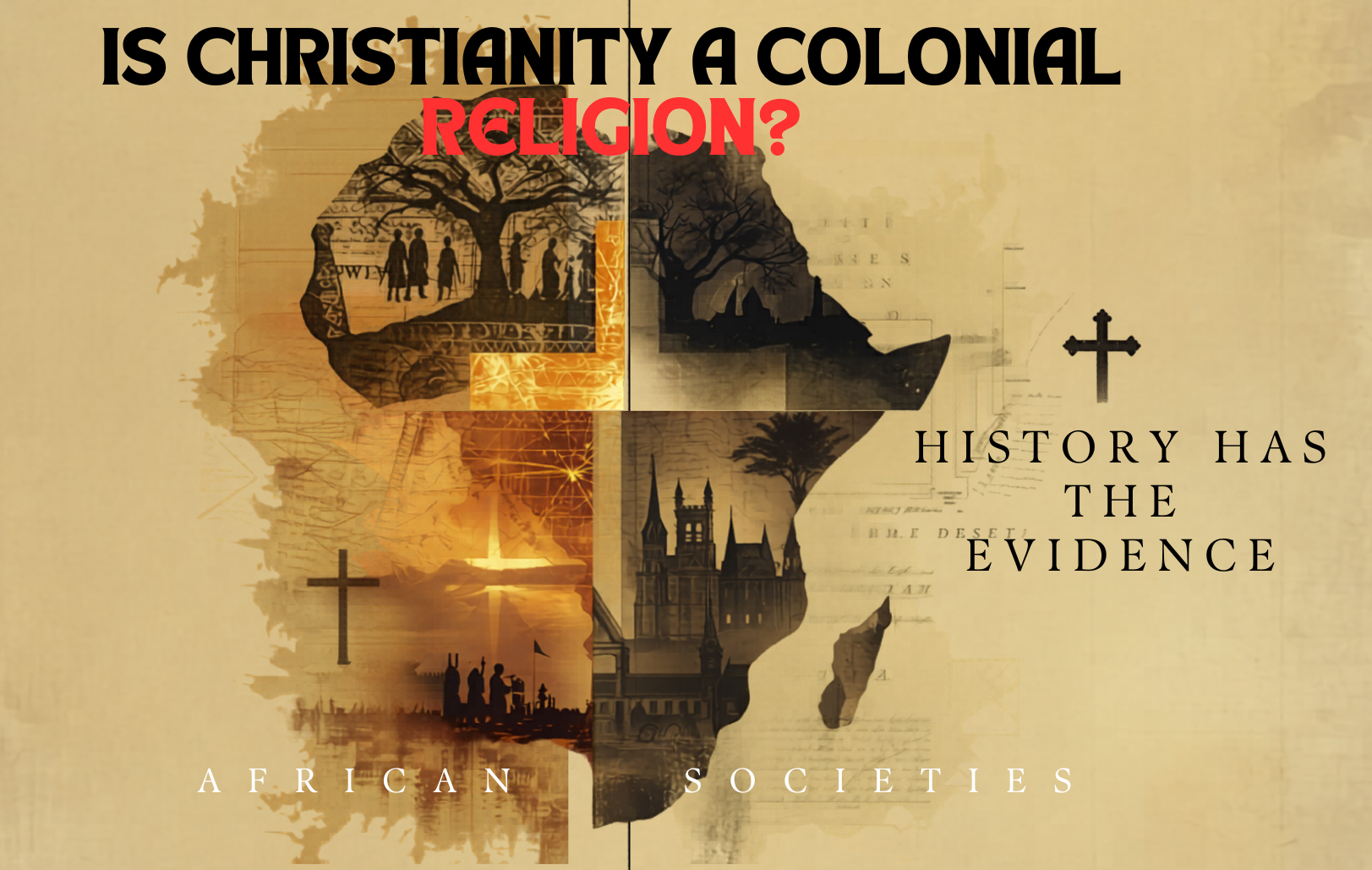
Is Christianity a Colonial Religion? At first glance, many assume it is, largely because of its strong association with European missionaries during the colonial era. But history tells a deeper story. Christianity did not begin in Europe. It originated in the Middle East through the life and teachings of Jesus Christ, and initially spread within Jewish communities before expanding outward. By the first century AD, Christianity had already reached Africa.
One of the earliest records appears in the Acts of the Apostles, where an Ethiopian official encounters the message of Christ and carries it back home. This alone shows that Africa was connected to Christianity from its earliest days. It is believed that Christianity was brought into Africa by Mark a disciple of Jesus. According to tradition, in AD 49, about 19 years after the Ascension of Jesus, Mark one of the disciples of Jesus travelled to Alexandria and founded the Church of Alexandria which was a city then in Egypt.
Another notable prove is a Jew named Apollos a native of Alexandria who was learned and thorough in Scriptures. He went to Ephesus teaching about Jesus and converting people into Christianity. Remember that Alexandria was in Egypt and for it to keep producing learned preachers thorough in scripture it implies that this great city had Christianity as an influential religion.
Even more compelling is the role of Alexandria in Egypt; a major center of early Christian scholarship. Influential thinkers like Origen and Augustine of Hippo helped shape Christian doctrine centuries before colonialism. Perhaps most striking is the Ethiopian Empire, which adopted Christianity as a state religion in the 4th century long before many European nations.
The most acceptable and widely used Bible though not compiled by a single individual or committee, The Council of Carthage listed the 27 New Testament books which took place in AD 397. Carthage was located in North Africa, in what is now modern-day Tunisia, just outside the present capital city of Tunis.
So where does colonialism come in? And why has Christianity been widely regarded a colonial religion? Colonialism did not introduce Christianity to Africa, it amplified and spread it across regions where it was not yet dominant. Missionary activities expanded the faith, but they did not plant its first roots.
So, is Christianity a colonial religion?
No.
It is more accurate to say that Christianity is an ancient faith with deep African roots that was later expanded during the colonial era. To call it purely colonial is to ignore Africa’s role not just as a receiver but as an early contributor to its history.